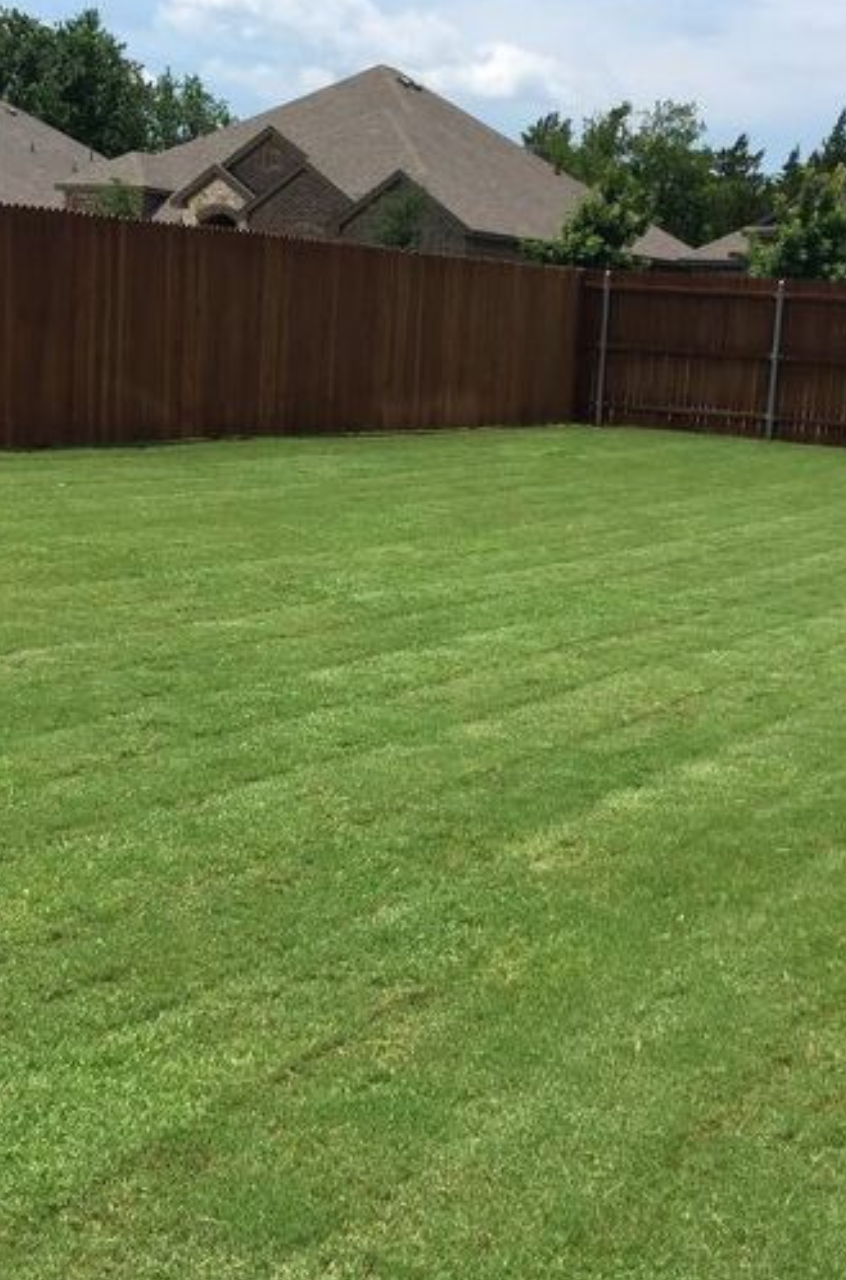
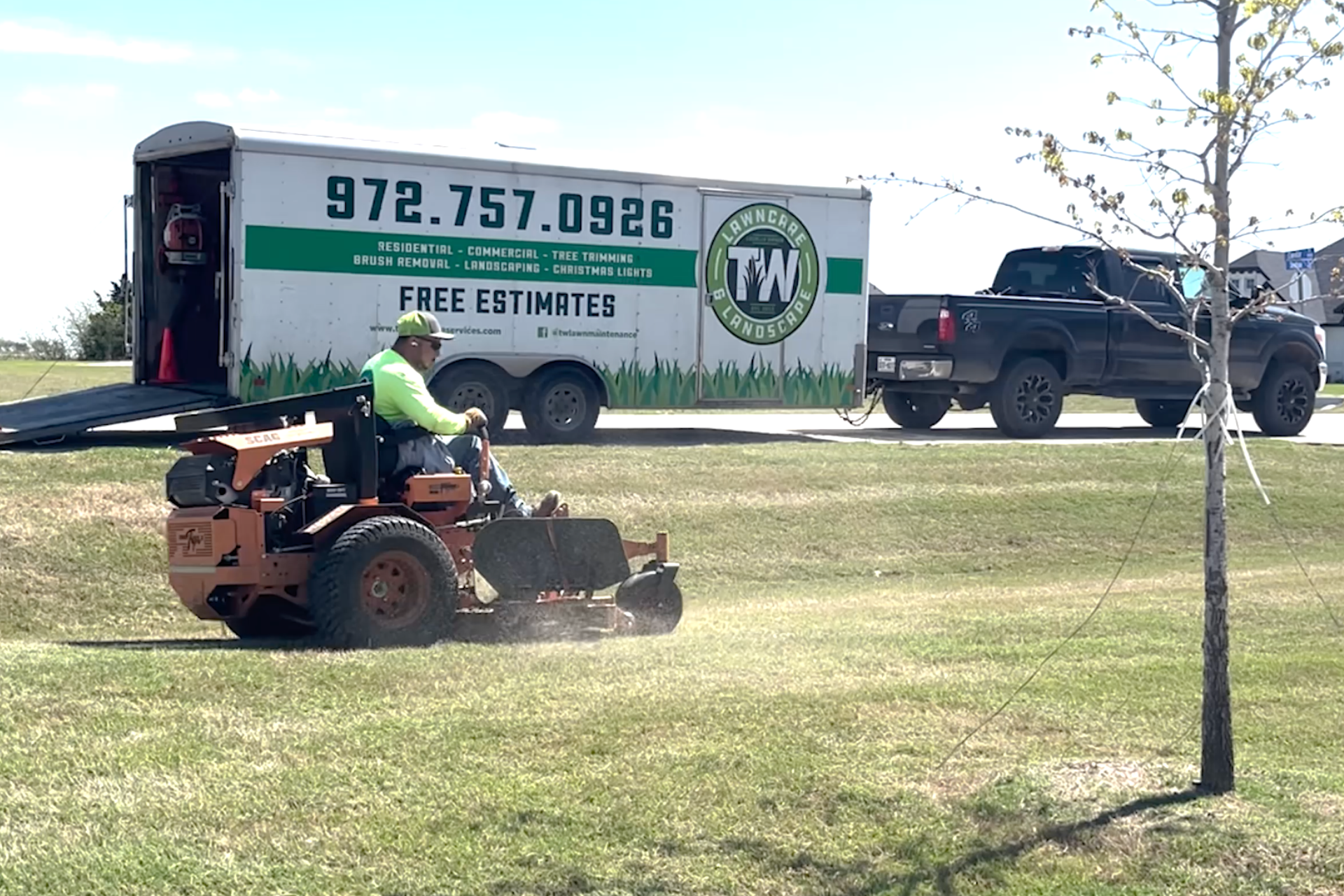
Short Answer: An irrigated Bermuda lawn in Ellis County grows three quarters of an inch to a full inch of vertical leaf in some seven day periods of July. The one-third rule (never remove more than a third of the leaf at one cut) limits a weekly mower to almost three inches of cutting height to stay healthy, which most homeowners cannot or will not maintain. The fix is mowing every five days instead of every seven through July and August, at a height between two and two and a half inches, with a sharp blade and mulched clippings. The result is a denser canopy, fewer weeds, and meaningfully less stress on the lawn through the hottest stretch of summer.
The single most common mistake we see on Midlothian Bermuda lawns in July is not watering. It is not fertilizer. It is mowing. Specifically, the assumption that the once-a-week mow that worked in April and May is still the right schedule in July. It is not. The growth math has changed, the lawn has changed, and the once-a-week schedule produces a stressed, scalped, weed-prone canopy through the most demanding stretch of the year.
This post lays out the schedule we recommend for Ellis County Bermuda through July and August, the reasoning behind it, and what to do if you cannot get yourself or your crew on a five-day cadence.
The Growth Math
Bermuda growth rate depends on air temperature, soil temperature, water, and nitrogen. In Midlothian in July with daytime highs between 95 and 100 degrees, irrigated lawns receiving normal fertility produce roughly half an inch to a full inch of vertical leaf growth in a seven-day period. Lawns with rich soil or recent fertilization push toward the upper end of that range.
Now apply the one-third rule. Mowing more than a third of the leaf at one cut shocks the lawn, exposes crowns, and produces visible scalp. So if your lawn is growing to four inches in seven days and you mow it down to two inches, you are removing half the leaf in a single cut. That violates the rule and the lawn pays the price.
The math works two ways. You can either mow shorter and more often, or you can mow taller and less often. The wrong combination, which is what we see most often, is mowing short (two inches) and less often (once a week). That produces scalp, stresses crowns, and opens the canopy to summer weeds.
The Right Schedule for July and August
Frequency: every five days. That cadence aligns the regrowth period with the one-third rule at a normal Bermuda height. It also matches the way professional crews operate (Monday and Friday, or Tuesday and Saturday).
Height: between two and two and a half inches for common Bermuda varieties like Tifway 419 or hybrid Bermuda. Slightly higher (up to three inches) for less-managed lawns or partial shade. Slightly lower (down to an inch and a half) is possible but requires more frequent mowing and a reel mower for clean results.
Direction: alternate the mowing pattern each cut. Same direction every time produces ruts and bent stolons.
Clippings: mulch them. Do not bag. Mulched clippings return nitrogen to the lawn (about 25 percent of seasonal nitrogen needs) and decompose within 48 to 72 hours.
Blade: sharpen at least every 25 hours of mowing, which works out to roughly monthly during summer for a homeowner mowing a typical lot. Dull blades tear leaves instead of cutting them, producing brown leaf tips that look like drought stress and create entry points for disease.
What Once-a-Week Mowing Actually Costs
Once you have skipped the math and you are mowing once a week through July, several things happen. First, you violate the one-third rule on every cut. That stresses the lawn and produces scalp in uneven areas. Second, the canopy opens up between mowing events as taller blades flop over, letting summer weeds like crabgrass and goosegrass germinate in the gaps. Third, the volume of clippings you generate exceeds what a mulching deck can handle, so you either leave clumps on the lawn (smothering grass underneath) or bag (removing organic matter).
Fourth, and most importantly, the lawn never reaches the canopy density that protects crowns from heat. The cooling effect of a dense Bermuda canopy can drop soil surface temperature by 10 to 15 degrees compared to a scalped lawn. That difference is the line between a Bermuda lawn that handles July and one that browns out in patches.
What a Five-Day Schedule Looks Like in Practice
For a typical Midlothian quarter-acre lot, a five-day mowing schedule means six mows in July and six in August instead of four to five. Each mow takes the same time. The total time investment increases by about 30 percent. The lawn outcome improves substantially.
For homeowners who hire a service, switching from weekly to five-day service adds about $20 to $40 per month depending on lot size. For homeowners who mow themselves, the cost is the extra hour every other week.
If five days is not possible due to schedule or budget, the best compromise is mowing every six days and raising the height to two and three quarter inches. The growth math still does not quite work, but the higher cut height absorbs some of the violation of the one-third rule.
When to Raise the Height Even Higher
If you cannot mow more than once a week, raise the height to three inches and accept that the lawn will look slightly taller. Healthy and tall is better than scalped and short. The taller canopy shades crowns, shades out weeds, and gives the once-a-week schedule a chance to work.
During heat waves with multiple days above 100 degrees, temporarily raise the height by another half inch regardless of your mowing frequency. The extra leaf area photosynthesizes more carbohydrates that the lawn needs to survive the stress.
On lawns recovering from chinch bug or armyworm damage, keep the height higher (three inches) for the entire recovery period (typically four to six weeks) to give the crowns the maximum chance to regenerate.
Watering and Mowing Should Be Coordinated
Never mow immediately after watering. Wet grass tears under the blade instead of cutting cleanly, the deck packs with wet clippings, and the mower compacts soft soil. Wait until the canopy is dry, usually by mid morning on a normal irrigation day.
Never water the same day you mow. The lawn is mildly stressed after a cut. Watering on top of it can favor disease pressure. Mow on Monday and Friday, water on Tuesday and Saturday, for example.
Mow before fertilization, not after. Recently mowed leaves absorb foliar nutrients better, and the fertilizer is less likely to be picked up by the next mow.
Equipment Notes
Push Mowers
Adequate for lots under a quarter acre with simple geometry. Sharpen the blade monthly. Verify the deck is level (one wheel out of adjustment scalps half the yard).
Self-Propelled Walk-Behinds
The right choice for most Midlothian residential lots between a quarter and a half acre. Look for a deck width between 21 and 22 inches and a quality mulching capability. Honda, Toro, and Snapper produce reliable machines in this category.
Zero-Turn Riders
The right choice for lots above a half acre. The speed advantage is meaningful and the cut quality is excellent on flat terrain. Less effective on steep slopes or tight spaces.
Reel Mowers
Capable of cutting Bermuda below an inch and a half with excellent quality, but require frequent maintenance and more frequent mowing. Best for homeowners pursuing a tightly manicured aesthetic and willing to mow every three or four days.
Common Mistakes Beyond Frequency
Mowing wet grass. Tears blades, packs the deck, increases disease risk.
Dull blades. Produces brown tips that homeowners mistake for drought stress and respond to with more water, compounding the actual problem.
Same direction every cut. Produces ruts in the soil and patterns in the canopy.
Cutting too short during a stress event. Always raise the deck during heat waves, drought stress, or pest recovery.
Bagging clippings. Removes the easiest source of free nitrogen and organic matter. Bag only when clippings are excessive (which itself is a sign you are not mowing often enough).
What This Schedule Buys You by August
Lawns on the right July mowing schedule head into August with denser canopy, deeper crowns, fewer weeds, and less stress. The August calls we get are dramatically different between homeowners who got the mowing right in July and homeowners who did not. The right mowers are calling about minor weed touch ups and pre-fall planning. The wrong mowers are calling about brown patches, weed pressure, and emergency rescue treatments. The treatment to fix August problems often costs more than a season’s worth of additional mowing service would have.
Frequently Asked Questions
What if my lawn is already on a weekly schedule and looks fine?
It probably is not growing at full speed. Properties on once-a-week schedules typically have slightly lower fertility, less irrigation, or partial shade. The schedule works for those lawns. For aggressively irrigated, fully fertilized, full-sun Bermuda, weekly does not.
Will more frequent mowing make my lawn need more water?
Marginally yes, but the difference is small (5 to 10 percent more transpiration from a denser canopy). The water-use efficiency of the lawn improves because deeper roots support the canopy. Total water cost is roughly the same.
Should I mow shorter in summer or taller?
Taller in summer for Bermuda in Ellis County. The cooling and weed-suppression benefits outweigh the slightly slower visual feedback. We recommend two and a quarter to two and a half inches for the July and August window.
Is bagging ever a good idea?
Yes when treating an active disease (to remove infected leaf tissue) or after an armyworm or chinch bug outbreak (to remove eggs). Otherwise mulch.
How often should I sharpen the blade?
Every 25 hours of mowing during summer, which works out to monthly for most homeowners. Keep a spare blade. Swap and sharpen on a rainy day.
What to Do Next
Pull your mower out this weekend and check three things. Blade sharpness (run your thumb across the edge; if it feels round, sharpen). Deck height (measure from the ground to the cutting edge with the mower on a flat hard surface; adjust to two and a quarter to two and a half inches). And your schedule. If you are on weekly, plan one extra cut between now and the end of July and observe the difference.
If you want us to handle mowing for you on a five-day schedule through July and August, or if you want a property walk to assess what your specific Bermuda variety and yard conditions need, call us at 972-757-0926 or visit twlawncareservices.com. We serve Midlothian, Waxahachie, Red Oak, Cedar Hill, and surrounding Ellis County, and the right mowing schedule is one of the highest-leverage things you can do for your lawn between now and Labor Day.